Community
A CHILD IS JUST A CHILD: WHAT IF THE NEXT STEP HAD BEEN ON A USED NEEDLE?
Medical waste, including blood-stained and potentially hazardous items, was found dumped next to Clive Solomon Stadium in Heidedal on Sunday morning.
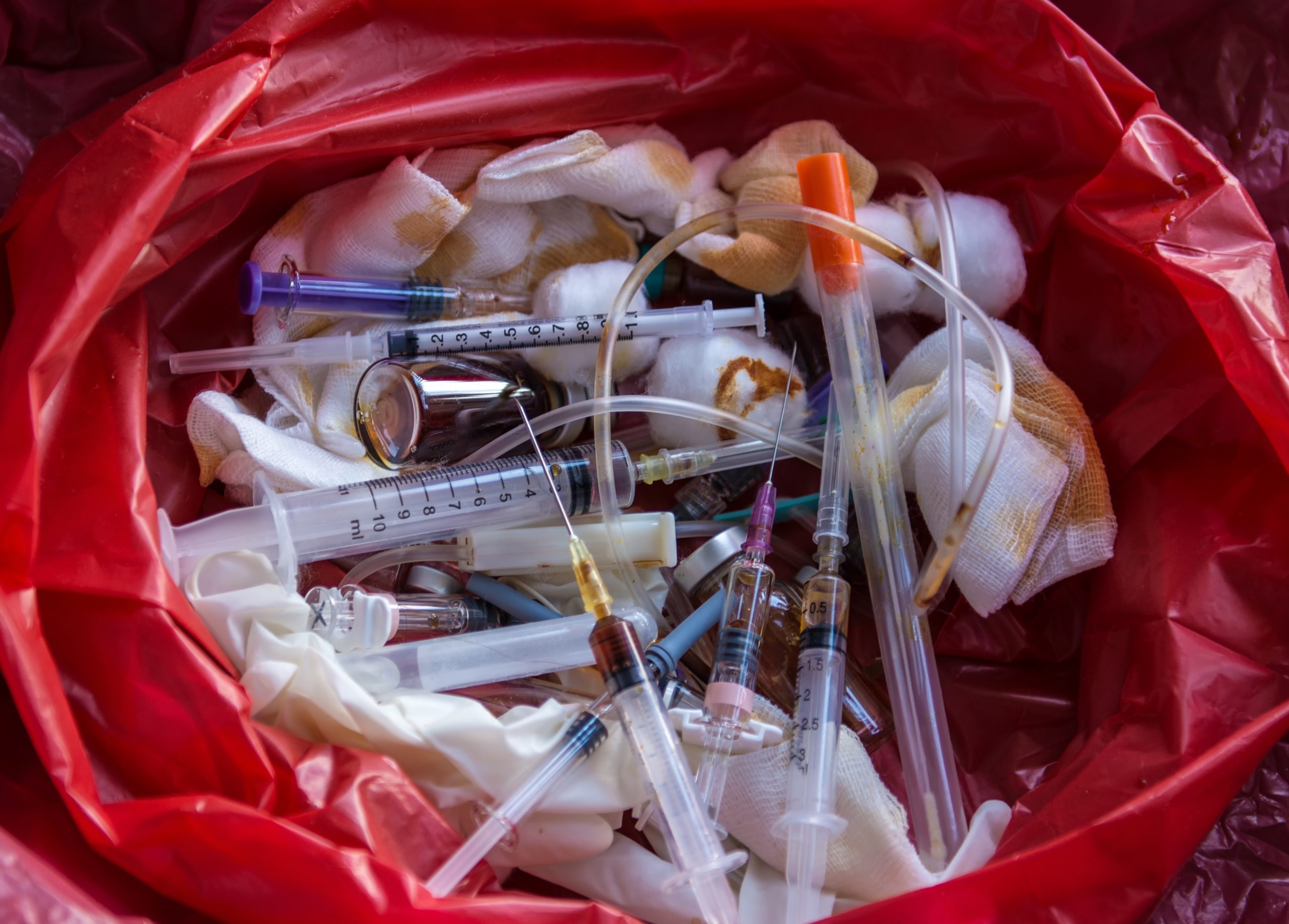
Medical waste, including blood-stained and potentially hazardous items, was found dumped next to Clive Solomon Stadium in Heidedal on Sunday morning — raising serious concerns about the danger posed to children and pedestrians who regularly use the area.
The discovery was made by a community member on the way to church, but what made the incident particularly disturbing was not simply where the waste had been dumped. It was what could have happened if a child had found it first.
A child is just a child. They do not necessarily understand that something lying on the ground could be dangerous. A discarded needle can look like nothing more than an object to pick up, examine or play with. A child running after a ball may not even see it before stepping on it.
That is the risk residents were confronted with on Sunday: potentially hazardous medical waste left in an open area where children play and members of the public pass through.
The situation was escalated quickly, with Patriotic Alliance Ward 16 councillor Gregory Werner and community leader Ola arriving at the scene, where they were joined by Selby Choene and his wife, who are members of the Neighbourhood Watch. The couple had already recognised the seriousness of the discovery and escalated the matter to the office of the Free State MEC for Health.
But while responsibility for dealing with medical waste should never fall on ordinary residents, the people who arrived did not simply stand around waiting for someone else to act.
They stepped in.
Using gloves and taking precautions, the group worked to remove the waste from the area before it could pose a further risk. The material was then transported to Pelonomi Hospital, where hospital staff assisted with its proper disposal.
That response deserves recognition. But it should not distract from the question at the centre of this incident: how did medical waste end up dumped next to a public stadium in the first place?
Medical waste is fundamentally different from ordinary household rubbish. Used medical items, particularly needles and other contaminated materials, can pose serious health risks when handled incorrectly. Leaving such material in an open public space turns an ordinary pedestrian area into a potential hazard — and children are among those least equipped to recognise that danger.
The concern is therefore bigger than the waste that was discovered on Sunday.
It is about the person who dumped it.
It is about whether the material came from a healthcare-related source.
It is about whether the dumping was deliberate or the result of irresponsible disposal.
And it is about whether anyone will establish how potentially hazardous material came to be lying beside a community facility used by children and residents.
Those questions matter because removing the waste addresses the immediate danger, but it does not necessarily address the reason it was there in the first place.
For residents, that distinction is important.
A community should not have to rely on someone passing by on their way to church to discover potentially dangerous medical waste before a child does. Nor should residents have to become the first line of defence against hazards created by irresponsible dumping.
Imagine a young child running through the area, chasing a ball and unaware of what is lying in the grass.
Imagine that child stepping on a used needle.
Or picking one up because they are curious.
At that moment, the child would not know who had used it, where it came from or what risks might be associated with it.
The child would simply see something lying on the ground.
That is precisely why the incident should concern the wider Heidedal community.
It is easy to talk about crime, drugs, deteriorating infrastructure and public safety as separate issues. But community safety also means asking whether spaces where children are supposed to play are actually safe for them to use.
Clive Solomon Stadium is a community asset. The areas surrounding it should not become dumping grounds for material that could potentially harm the very residents the facility is meant to serve.
And while Sunday's response showed what can happen when residents refuse to look away, community intervention cannot become a substitute for accountability.
Someone should be asking where this waste came from.
Someone should be asking why it was dumped there.
Someone should be asking what measures are in place to prevent it from happening again.
Most importantly, someone should be asking what could have happened if nobody had found it.
Because the most frightening part of Sunday's discovery is not necessarily what residents found.
It is what they might not have found in time.
A used needle does not announce itself as a danger. A child does not have to understand the risk for the consequences to be real.
And that leaves Heidedal with a question that should not be dismissed as simply another dumping complaint:
What if the next person to discover a discarded needle is not an adult — but a child?
NovaSpeak acknowledges the community members who raised the alarm and acted swiftly, including Ola, Selby Choene and his wife from the Neighbourhood Watch, Ward 16 councillor Gregory Werner, the office of the Free State MEC for Health and staff at Pelonomi Hospital who assisted with the safe disposal of the waste.
Their actions prevented a potentially dangerous situation from simply being ignored.
But the community should not have to depend on good people being in the right place at the right time.
A child is just a child. They should be able to run, play and explore their community without having to know whether the next step could put their health at risk.
NovaSpeak | The Pink Print
We Look. We Ask. We Tell The Stories That Matter.
#NovaSpeak #ThePinkPrint #Heidedal #CommunitySafety #ChildSafety #Accountability #Transparency